The running man movie trailer makes the new film look less like a simple chase movie and more like a public execution stretched into a reality show. The key reveal is the 30-day rule: Ben Richards has to stay alive while professional Hunters, TV producers, and a watching public all turn his survival into entertainment. If you are trying to judge the tone, expect glossy action, sharp media satire, and a much darker family motive behind Ben's choice.
What rules does The Running Man trailer reveal?
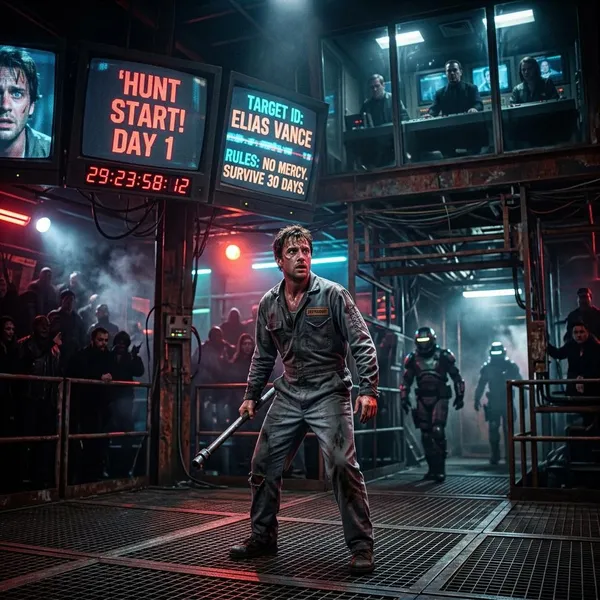
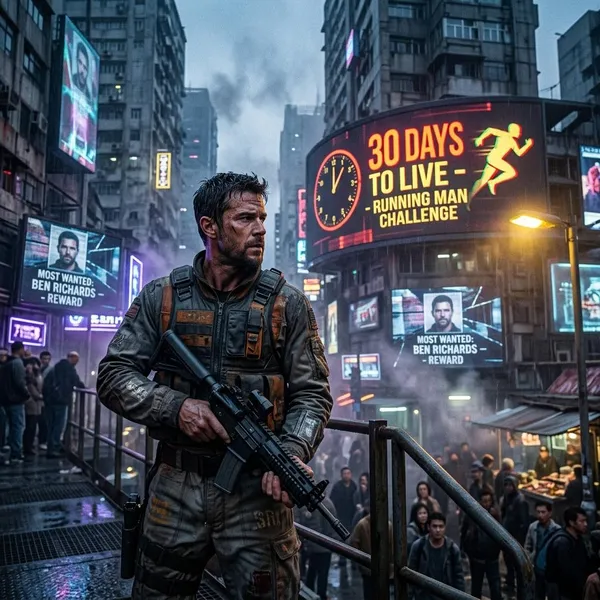
The trailer lays out the game quickly enough to understand the stakes: a Runner survives as long as possible, the Network broadcasts the hunt, and the reward rises with each day survived. The most important thing to notice is that the danger is not only the people chasing Ben. The real trap is the system around him, because cameras, producers, prize money, and public attention all push the game to become more extreme.
Runners must survive for 30 days
The 30-day rule gives the trailer its clearest hook. A one-night escape would be tense, but a full month means exhaustion, changing locations, public obsession, and a constant need to make better decisions than the people hunting him.
That timeline also changes how you should read the trailer. Early action scenes may be about panic and survival, while later ones are likely about reputation, pressure, and whether Ben can keep control once the Network realizes he is not collapsing on schedule.
Professional Hunters track them down
The Hunters are presented as part of the show's design, not random villains who happen to chase Ben. That matters because the threat looks organized: trained pursuers, controlled spectacle, and tactics meant to make the game exciting for viewers.
- For action fans: the Hunters promise direct set pieces and physical danger.
- For King readers: they show how violence becomes a paid profession inside a broken society.
- For viewers avoiding very intense films: this is the clearest warning that the movie may be harsher than a standard sci-fi adventure.
Every move becomes public entertainment
Ben's survival is not private. The trailer shows a world where the Network packages the hunt for mass attention, which makes the premise more uncomfortable than a basic manhunt. He has to worry about being found, but also about being framed, edited, and turned into the kind of character the show wants audiences to consume.
The prize grows with each day survived
The rising prize explains why someone desperate would enter a game that looks almost impossible to win. For Ben, each extra day means more money and more hope for his daughter, but it also gives the Network a bigger reason to make his next day harder.
That is the cruel bargain at the center of the trailer: the same rule that keeps Ben running also makes him more valuable as entertainment.
What happens to Ben Richards in the trailer?
Ben Richards starts the trailer as a desperate father and ends it looking like a problem the Network did not expect. His path is not just "contestant tries to survive." It is closer to "ordinary man becomes too popular, too defiant, and too visible for the people controlling the game."
Ben enters to help his sick daughter
Ben's motive is practical and emotional rather than heroic. He enters because his daughter is sick and he needs money, which makes the choice feel less like thrill-seeking and more like desperation under pressure.
That detail is important for two different viewers. If you are new to The Running Man, it gives the story an immediate human reason to care. If you already know the older Schwarzenegger film, it signals that this version is leaning harder into the social cruelty of Stephen King's premise.
His defiance wins over viewers
Ben appears to gain attention because he refuses to perform as a helpless victim. The trailer sells him as angry, cornered, and increasingly unwilling to let the show define him.
His popularity threatens the Network
Popularity is useful to the Network until it changes what the audience is rooting for. If viewers start seeing Ben as a symbol of resistance instead of disposable content, the show loses control of its own story.
That is where the trailer's conflict gets more interesting. The Network can profit from Ben's fame, but it also has to contain it. The more people care whether he lives, the harder it becomes to treat his death as just another episode.
The hunt grows more dangerous
The trailer suggests that surviving longer does not make Ben safer. It makes the response against him more aggressive, because every escape embarrasses the people who designed the game to be unbeatable.
Who stands out in The Running Man trailer?
The cast stands out because each major figure seems to represent a different part of the machine around Ben. Glen Powell carries the emotional and physical survival story, Josh Brolin gives the Network a cold executive face, Colman Domingo brings the polished show-business layer, and Lee Pace looks positioned as a more immediate threat in the hunt.
Glen Powell as Ben Richards
Glen Powell's Ben looks more vulnerable than invincible, which is the right choice for this premise. The trailer needs him to be believable as a father with no good options before it asks us to accept him as someone who might survive a national death game.
His screen presence also matters for the in-story popularity angle. Ben has to look like someone audiences might latch onto for messy, emotional reasons, not because he was designed by the Network to be a perfect hero.
Josh Brolin as Dan Killian
Josh Brolin's Dan Killian comes across as the kind of villain who does not need to shout to be threatening. He appears to understand the game as a business first, which makes him more unsettling than a simple sadist.
Colman Domingo as Bobby T
Colman Domingo's Bobby T seems to be the face that makes the horror presentable. His role matters because a show like this would not survive on violence alone; it needs charm, rhythm, and a host-like polish that tells the audience their own appetite is normal.
For viewers interested in the satire more than the action, Bobby T may be the character to watch most closely. He represents the part of the system that smiles while the worst thing in the room is happening.
Lee Pace as McCone
Lee Pace's McCone looks like the trailer's more direct source of menace. Where Killian suggests corporate power, McCone gives the hunt a physical edge, the kind of presence that makes the rules feel dangerous in the moment rather than just cruel in theory.
What Stephen King themes come through in the trailer?
The trailer keeps several Stephen King ideas close to the surface: powerful institutions exploiting poor people, media turning pain into profit, and ordinary anger becoming politically dangerous. Edgar Wright's version may look fast and stylish, but the story still seems built around a grim question: what happens when survival itself becomes content?
Corporate media control
The Network does not appear to be observing the hunt from a distance. It creates the format, controls the presentation, and benefits from every dramatic turn. That makes the media system the main antagonist, even when individual characters are the ones giving orders or chasing Ben.
Poverty and desperation
Ben's choice only makes sense in a world where safer options have failed him. The sick daughter motive gives the trailer its emotional pressure, but it also points to a broader King theme: desperate people are easier to exploit when powerful systems control the price of survival.
This is where the movie may land differently depending on the viewer. Someone coming for a Friday-night action film may focus on the chase, while someone watching for the dystopian angle will likely notice how carefully the game depends on people having no good alternatives.
Violence as entertainment
The trailer's violence is meant to be exciting, but the story's world treats that excitement as the problem. The public watches because the show has turned fear into a product, and the Network keeps raising the stakes because attention is the real currency.
- Thrill: the chase scenes pull the viewer in.
- Discomfort: the movie asks why that kind of spectacle is so easy to sell.
- Satire: the audience inside the film mirrors the audience outside it.
Rebellion against the system
Ben's rebellion seems to begin as survival, not ideology. He wants to live long enough to help his daughter. But once the public starts reading his survival as defiance, the personal fight becomes a threat to the Network's authority.
That is the trailer's strongest King-style pressure point. The system can handle victims and celebrities; it has more trouble with someone who becomes both and refuses to stay useful.
Conclusion
The trailer's biggest promise is not just a brutal 30-day chase, but a story where every day Ben survives makes him more valuable, more visible, and more dangerous to the people exploiting him. If you want sleek dystopian action, the footage clearly points that way; if you care more about Stephen King's sharper ideas, the media-control and poverty themes are still doing real work. The smartest expectation is a fast survival thriller with satire built into the rules, not a simple remake of the 1987 movie.