The dracula movie trailer makes one thing clear right away: Luc Besson's film is selling Dracula as a tragic gothic romance, not just another vampire horror story. The footage points to grief, obsession, lavish period imagery, and a cast built around emotional conflict. If you are deciding whether this version is for you, the trailer suggests a darker love story with horror elements rather than a straight scare-driven remake.
What does the Dracula movie trailer reveal?
The trailer reveals the film's main selling point: Dracula's pain and longing are placed before the monster-movie mechanics. There is still blood, danger, religious conflict, and supernatural threat, but the emotional hook is the idea of a man cursed by loss and unable to let the past stay buried.
That matters for expectations. Viewers looking for constant jump scares may find the tone slower and more romantic, while viewers who enjoy gothic melodrama, doomed love, and ornate visuals are more likely to connect with what the trailer is promising.
- Check the tone first: this looks mournful and operatic, not fast or ironic.
- Watch the official upload: fan edits can distort the cast, release claims, or horror level.
- Expect romance and danger together: the trailer does not separate Dracula's love from his threat.
A gothic love story at the center
The footage places Dracula's lost wife at the heart of the story. His grief appears to become the reason for his transformation and the force that pulls him toward Mina centuries later. That makes the romance feel dangerous rather than soft: what Dracula calls devotion may also be obsession.
For a casual viewer, this is the first thing to notice. The trailer is not asking only "Who will Dracula kill?" It is asking whether love twisted by immortality can become its own kind of horror.
Dark and lavish period visuals
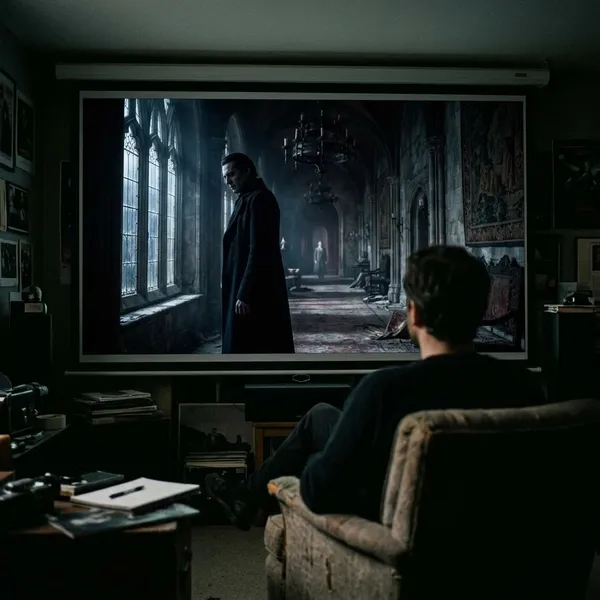
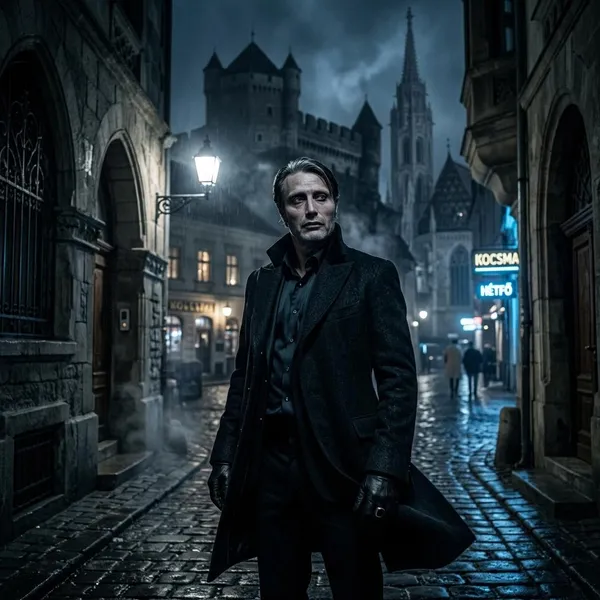
The visual style is one of the clearest signals in the trailer. Candlelit rooms, heavy costumes, sacred imagery, and shadowed interiors create a formal gothic world instead of a modern vampire setting.
That kind of design can make or break this film. If you enjoy period fantasy and stylized romance, the look is probably a reason to watch. If you prefer stripped-down horror with a realistic edge, the trailer suggests this may feel too theatrical for your taste.
A tragic romantic tone
The tone leans into sorrow more than shock. Even the violent moments seem framed as part of Dracula's curse, not as simple spectacle.
Supernatural action and conflict
The trailer still shows enough supernatural conflict to keep the story from becoming only a doomed romance. There are hints of pursuit, violence, transformation, and religious resistance.
The most useful way to read those moments is as pressure on the central relationship. Dracula's longing creates danger, the Priest pushes back against it, and Mina appears caught between attraction, fear, and a past she may not fully understand.
Who appears in the Dracula movie trailer?
The trailer keeps the cast focus fairly tight. Caleb Landry Jones appears as Dracula, Christoph Waltz appears as the Priest, Zoë Bleu is shown as Elisabeta and Mina, and Matilda De Angelis appears as Maria.
Caleb Landry Jones as Dracula
Caleb Landry Jones's Dracula looks fragile, intense, and unstable rather than smoothly seductive. That choice fits the trailer's emotional angle because this version of Dracula seems driven by grief as much as hunger.
If the full film works, it will likely depend heavily on whether his performance can make Dracula feel tragic without excusing the harm he causes. The trailer suggests that tension is intentional.
Christoph Waltz as the Priest
Christoph Waltz gives the trailer its clearest opposing force. His Priest appears to understand Dracula as a spiritual and moral danger, not just a creature to be hunted.
Zoë Bleu as Elisabeta and Mina
Zoë Bleu's dual role is the trailer's most direct way of linking past and present. Elisabeta appears to be Dracula's lost love, while Mina becomes the figure who reawakens that wound centuries later.
- As Elisabeta: she represents the loss that breaks Vlad.
- As Mina: she raises the question of whether Dracula sees a real connection or only what he wants to see.
Matilda De Angelis as Maria
Maria's exact function is less clear from the trailer, but Matilda De Angelis appears to be part of the human world affected by Dracula's return. Her role may be smaller in the footage, yet characters like this often show the cost of the central obsession beyond the doomed couple.
What story does the Dracula trailer set up?
The trailer sets up a simple but dramatic arc: Vlad loses his wife, becomes Dracula, carries that loss across centuries, and is drawn back into the world when Mina seems connected to Elisabeta. The Priest then becomes the figure trying to stop that obsession from turning into further destruction.
For viewers who do not know much Dracula lore, the setup still reads clearly. The trailer gives enough emotional cause and effect to follow the story without needing every detail from Bram Stoker's novel in advance.
Vlad loses his wife and becomes Dracula
Vlad's transformation appears to come from catastrophic grief. The trailer suggests that losing Elisabeta breaks his faith, his humanity, or both, pushing him into the identity of Dracula.
This origin gives the film a tragic foundation, but it does not make Dracula safe. A good gothic story often works exactly because the wound is understandable while the choices that follow are not.
Dracula searches centuries for his lost love
Immortality is presented less like power and more like punishment. Dracula seems trapped in the same emotional moment, carrying one loss for centuries instead of moving beyond it.
That is where the trailer's romance becomes darker. A temporary grief story might be sad; a centuries-long fixation becomes dangerous, especially when another person is expected to complete a past she did not choose.
Mina draws Dracula back into her life
Mina appears to be the trigger for Dracula's return to direct action. The trailer frames her as a possible echo of Elisabeta, but it does not fully answer whether that connection is fate, reincarnation, resemblance, or Dracula's projection.
That uncertainty is useful. If Mina has real agency, the story can become more than Dracula chasing a memory. If the film treats her only as a replacement for Elisabeta, that will be the point where some viewers may push back.
The Priest sets out to stop Dracula
The Priest seems to recognize the danger before others do and moves toward confrontation. His purpose is not only to oppose Dracula physically, but to question the morality of turning grief into possession.
This gives the plot a necessary outside force. Without him, the story could stay locked inside Dracula's longing; with him, the trailer promises a clearer conflict between desire, faith, violence, and responsibility.
How does the new Dracula movie adapt Bram Stoker's story?
The trailer shows a film that remains connected to Bram Stoker's Dracula but does not look like a strict page-by-page retelling. Familiar elements are present: Dracula, Mina, gothic settings, sacred symbols, corruption, and a human effort to resist the vampire's power.
The major shift is emphasis. Instead of treating Dracula mainly as an invading monster, the trailer moves his lost love and emotional torment to the front. That makes the film feel closer to a gothic romantic fantasy with horror running through it.
Bram Stoker's novel remains the source
The Stoker connection is visible in the character names, vampire mythology, spiritual imagery, and the tension between desire and danger. Even with a more romantic approach, the trailer does not appear to abandon the classic Dracula framework.
Dracula's love story takes center stage
Romance is not just a subplot here; it appears to be the engine of the adaptation. Dracula's grief explains the film's mood, his pursuit of Mina, and the tragedy surrounding his immortality.
This is also the main expectation check. If you want Dracula as a pure predator, this trailer may feel too sympathetic. If you like adaptations that explore why the monster became monstrous, the emotional focus is the hook.
Familiar characters get new roles
Mina's connection to Elisabeta gives her a stronger mythic role than simply being someone Dracula targets. The Priest also seems more central than a background religious figure, functioning as a direct moral counterweight.
Those changes are typical of a reinterpretation rather than a simple remake. The names may be familiar, but the trailer asks viewers to watch how the relationships are being rearranged.
Romance and fantasy shape the adaptation
The trailer's symbols, costumes, music, and heightened imagery push the film toward dark fantasy as much as horror. It does not look grounded or restrained; it looks intentionally grand.
That can be a strength if the full movie commits to it. The risk is that the romance could overwhelm the threat, but the trailer seems aware that Dracula must remain frightening for the tragedy to matter.
Conclusion
The trailer makes the new Dracula film look like a gothic romance first and a horror story second, with grief, reincarnation, faith, and obsession driving the conflict. The practical takeaway is simple: watch the official trailer before judging the film by the Dracula name alone, because this version seems aimed at viewers who want tragic atmosphere and emotional intensity as much as vampire danger.